
(I originally published this in 2019, while living in Barcelona, but I’ve updated it after being in Puerto Rico for a year).
A question I’m often asked by friends or family: “How’s your Spanish?”
The short answer is it’s pretty good, at least enough to get by and communicate in most day-to-day situations I find myself in.
Truthfully, my Spanish should be better after living in Spain for two years and Puerto Rico for a year, but I’m working on not being too hard on myself!
With Covid and working remotely in English, a good portion of my learning over the past few years has been self-directed. Other than marrying a patient native speaker, here are some tips and tools I’ve found helpful along the way.
1. Podcasts
Podcasts are great because there’s really no excuse not to do them. I listen to Spanish podcasts mostly while doing chores or yard work, or walking my dog. They’ve greatly help my listening comprehension, but the downside is they don’t improve speaking skills too much.
For those learning Spanish, particularly in Spain- I highly recommend Notes in Spanish. The podcast is hosted by a married couple, Ben and Marina, who live in Madrid. Ben is English, but speaks excellent Spanish and does a good job of pointing out certain words or grammar points that trip up native English speakers. As a couple they have a good sense of humor, and Marina will point out Ben’s mistakes and repeat tricky phrases several times. I also find their voices pleasant, which is important when you spend so much time listening to someone!
TED en Español is excellent, and has 10-15 min podcasts about a fascinating range of topics in typical TED fashion.
Español con Juan is a great change of pace from the more formal podcasts. Listening to Juan’s podcast is sort of like going on a walk with a chatty opinionated Spanish uncle. The podcast is entertaining and I always enjoy his episodes.
I’ve been having trouble finding a good Puerto Rican podcast. The accent here gives me a lot of trouble compared to the Spanish accent so I want to practice listening to it. I recently came across a daily news podcast that I’m enjoying so far, though!
Oct 13 edit: “La Brega” is a really really great podcast that I just discovered with episodes in both English and Spanish.
2. Reading/Kindle
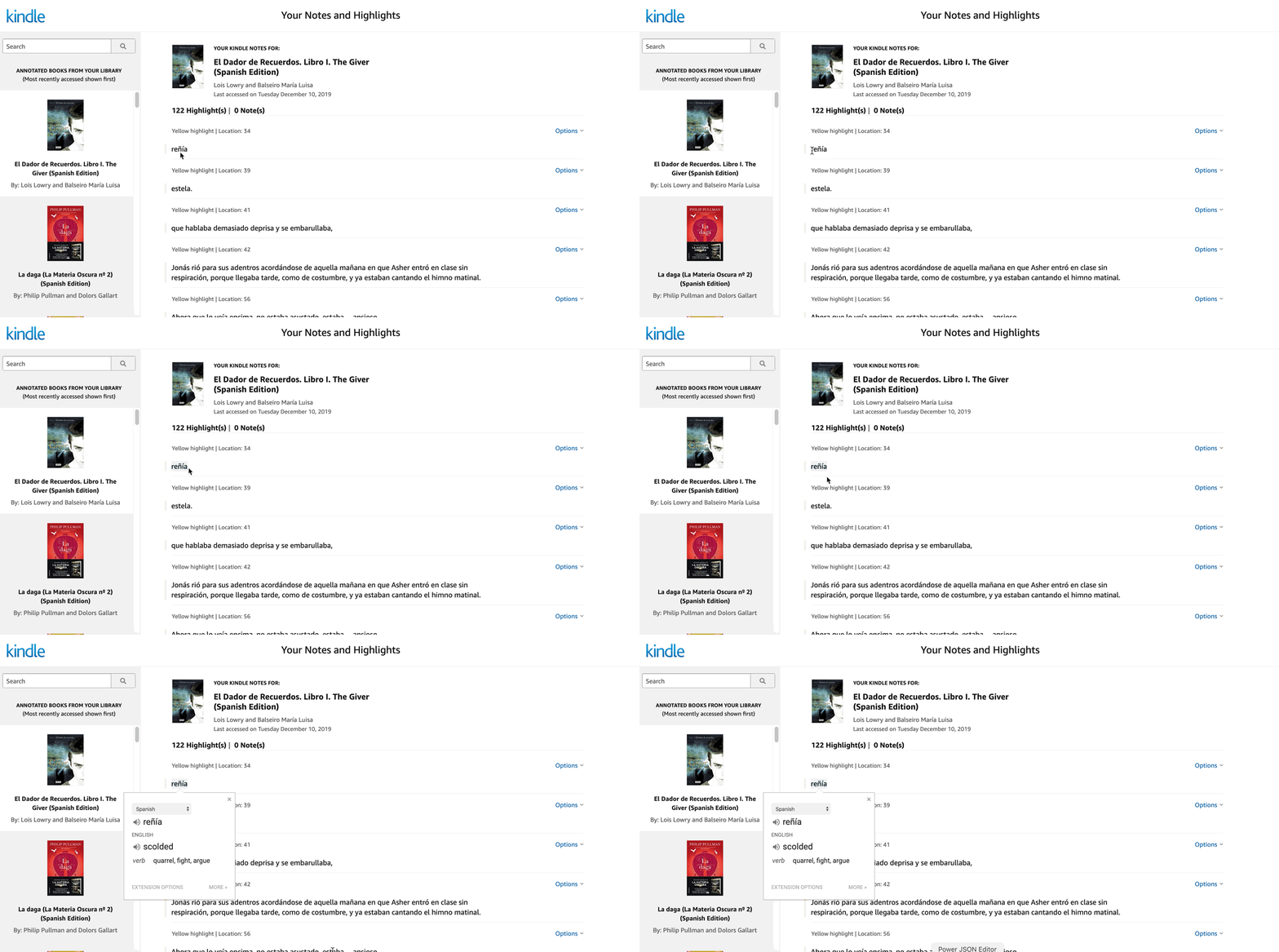
Reading in Spanish has helped bolster my vocab and grammar (although some of the words I learn aren’t commonly used in Puerto Rico). A Kindle is nice because you can highlight a word or a sentence to get an instant translation into English. Kindle also stores these highlighted words or passages on your account at https://read.amazon.com/notebook so you can revisit them later on.

I’ve slogged my way through a handful of books. It can be pretty mentally draining at times to even get through a few pages. However, it’s a great excuse to read books I loved as a kid (I’m at a young-adult reading level). Knowing the plot can take some of the pressure off of understanding everything when reading a challenging passage.
3. Google Translate (mobile app)
When I first lived abroad I found it really helpful to carry a small notebook with me everywhere I went. I’d jot down new words learned during the day so I could look them up and review them later.
Well, no need for a notebook anymore. We all carry phones in our pockets now!
The Google Translate app lets you search translations in seconds. You can also star certain words to add them to your “phrasebook” which you can sort and review later, as well as access from other devices.
I’ve also found the Google Translate browser extension to be really helpful for fast translations while on your computer. I use it in tandem with my Kindle highlights to review these and put them into a notebook:
4. Subtitles and streaming
Similar to the podcasts, adding subtitles to the shows and movies you’re already watching is so easy you might as well do it. Even if I decide to watch a movie with English audio, turning on the subtitles in Spanish can help me pick up a few words and phrases.
A movie with Spanish audio and English subtitles can help you hear the flow and sound of the language while also following the plot.
As your reading comprehension picks up (from your Kindle, perhaps), you can switch to Spanish audio with Spanish subtitles. Double-whammy! I find this to be really difficult if it’s late and my brain is tired, but it’s a great way to maximize your exposure to the language.
On Netflix we’ve watched several shows in Spanish, including Reina del Flow, Monarca, and La Casa de Papel (also called Money Heist). I recommend all three!



I find it distracting to watch English movies that are “dubbed” into Spanish, perhaps because the lips clearly don’t match the words. But with animated films it doesn’t bother me, and Disney+ also offers everything with Spanish audio and/or subtitles. El Rey León = nostalgia and language learning all in one!
5. YouTube videos
I’m just beginning to scratch the surface of these resources, and there are so many.
For grammar and comprehension, I recommend Deliberate Spanish. Nacho aims to get you out of “Spanish intermediate purgatory” and the videos incorporate pausing the video and repeating phrases aloud. I find his videos challenging; by the end of one 12 minute video my brain will be exhausted. That’s usually a good sign that I’m learning! (Update: Nacho also launched an online Spanish learning community call La Comunidad. It’s a paid membership and features live classes, recorded lessons and tons of writing and speaking exercises that are graded by native speakers. Definitely worth checking out!)
For Puerto Rican Spanish I’ve enjoyed the Speak Spanish Faster channel, it’s much less focused on grammar and more on vocabulary, culture, and pronunciation.
6. Speaking
Admittedly this is the one “tip” on this list that is hard to do by yourself (although I do have Spanish conversations aloud with myself sometimes. Don’t knock it ’til you try it!).
At the end of the day, the only way to improve speaking is to actually speak. Watching movies and reading books won’t help. Even though I’ve been blessed to live in Spanish speaking places and have had no shortage of opportunities, I still shy away from speaking.
I worry I’ll sound like an idiot, that people won’t understand me, or that their English will be better than my Spanish so I’m wasting our mutual time. A lot of this is in my head since my speaking Spanish here on the island has been met with overwhelmingly receptive and encouraging listeners. It also helps to remind myself that this is how humans learn language. We crawl before we walk. Native speakers won’t expect me to speak perfectly, so I shouldn’t either.
7. Writing
I recently started writing in Spanish in a diary, usually while I sit down with my coffee in the morning. Sometimes I’ll write down two or three things I’m grateful for. Other times I’ll write a little bit about what I did the day before. I’ve even started writing my to-do list in Spanish (which is helpful for learning verbs!). With writing I can take my time to find the right word (or look it up), as well as recognize grammar points that I need to explore later.
I still mostly text/Whatsapp with my Puerto Rican friends and family in English, so that’s another opportunity for me to continue practice writing.
I hope this post helps you if you’re trying to learn Spanish (or any language, really!). If you have any tips, tools, or recommendations, please let me know in the comments. I’m always looking for fresh, fun ways to learn.
Until next time, be well!
Mateo


 Gringo Green
Leave a reply to Albatz Travel Adventures Cancel reply