“Toto, I’ve a feeling we’re not in Kansas anymore.”
June 1 marked the beginning of hurricane season, and experts are predicting a higher number of named storms than any other year since 1991, when they started doing these predictions.1
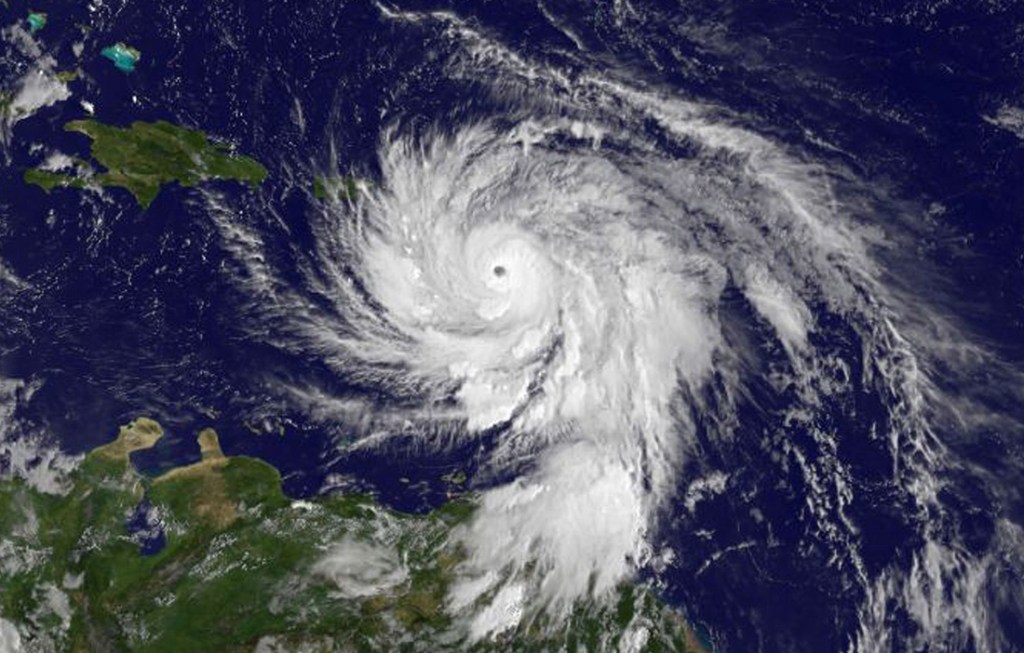
As I type this blog post, Hurricane Beryl has strengthened to a category 4 hurricane, the earliest a storm of this strength has ever formed in the Atlantic.
Last month, on a sunny Wednesday, 350,000 residents of Puerto Rico suffered a power outage during a heat wave. I suppose the size of the outage made it newsworthy, because the fact is we lose power weekly. The day before that, our sector had no water for over twelve hours because of “repairs.”
The stress of living daily life in Puerto Rico with such fragile infrastructure wears on you, even more so during hurricane season.
Hurricanes are a different beast
Growing up in the Midwest part of the US, our “storms du jour” were tornadoes.
The opening scene of the movie Twister traumatized me for years as a young boy, but the truth is that most tornados are nothing like that carnage.
A tornado usually came with a thunderstorm, and a siren would blare 15 or 30 minutes before a tornado might appear, hopefully enough time to find shelter and be safe. In school, we had the occasional tornado drill where the entire school crowded into the basement hallway and assumed the fetal position.2
But a hurricane is a different beast. Living on an island, “evacuation” isn’t a feasible option. Modern technology gives us the ability to predict the arrival path of a storm days in advance. A blessing, sure, but it also feels like sitting tied to a chair waiting for someone to punch you in the face.

During hurricane season, I check the National Hurricane Center’s website every morning to see what’s spinning off the west coast of Africa towards us (see screenshot to the left).
When a storm approaches, the friend and family WhatsApp groups start buzzing. If it’s going to hit, lines grow long at the grocery stores, gas stations, hardware stores. People take off work to stock up and prepare. Everyone is a little on edge, all the time.
Sometimes the storms miss you, swerving north or south of the island. A blessing, yes. But three days of bracing for impact is not without a mental, physical, and societal effect.
Then there’s the storm itself. I experienced my first hurricane of my life last year with Fiona, a category 1 storm which dumped massive amounts of rain on the island (over 20 inches in some places.)
What stood out to me with Fiona was how long the storm sits on top of you. For three days it rained. Like, rained. Time seems to warp and the daily rhythm of life becomes distorted.

What I haven’t experienced — and hopefully don’t experience anytime soon — is life on the island in the aftermath of a major storm, like Hurricane Maria in 2017. When Maria comes up in conversation with people who lived it, you can see in their reactions and their words how utterly transformative an experience it was for this island. There is a very real communal PTSD.
Preparations
When we moved here in 2020 I asked a good friend of ours who has lived in Puerto Rico her entire life how she prepares for a major storm. She sent us a long list of tasks to do, things to buy and stock up on.
- Here is the list she sent us.4
- Over the past couple of years, I’ve modified the list to our family’s needs. Here is our list. If you have anything you would add, let me know in the comments!
There’s a lot there, but I generally think of it as two main areas:
- minimizing damage to your property (during the storm)
- living on an island (after the storm)
Minimizing damage
Almost every house in Puerto Rico is made of concrete, which means they aren’t blowing away in with the wind. The main enemy here is water.
I have been amazed by how fast and heavy it rains here. Here is a video of a heavy afternoon rainstorm (not a hurricane):
Our house is at the bottom of a big hill, so maintaining the drainage seen in that video is important. This spring we added a French drain to the yard where water pools and so far it has helped keep water moving away from the house.
We also have large trees surrounding our house, and they need trimming every couple of years. I highly recommend the company that helped us — Tierre K-ribe. Look at these guys go!
In the days before a storm, we make sure to clear all the drains, gutters, board windows, and make sure we tie down anything that can become a projectile (which is basically everything).
Life post-storm
As I mentioned, I haven’t experienced a storm that completely changed daily life here. Most of the hurricane preparations are for this, though, the big storm that shuts down the island for days, weeks, or months.
From what I’ve gathered, the main categories are:
- Food – nonperishable is better, since there won’t be power. We try to have enough for five to ten days. We also opted to get a gas powered stove so that we could cook during a power outage.
- Water – one gallon per person per day is the goal. Plus water to bathe, do laundry, wash dishes, flush toilets. We have a 500 gallon gravity cistern on our roof that can help for a few days. And we use the pool water to flush toilets with buckets.
- Money (cash) – This might seem obvious to some, but I didn’t think of this! Banks will be closed and internet could be down, meaning credit cards won’t work.
- Power – we have a portable gas power generator. It can power the fridge and a few ACs, and has saved our butt numerous times. I definitely am interested in getting solar, though!
We’re in it together
I’ve mentioned this in a couple other posts, but the strong sense of community here is one of the most reassuring resources that we can rely on during a major storm. It’s one of the things I love most about Puerto Rico. Your neighbor is your neighbor. We’re all in this together, and should a major storm hit, we will get through it and rebuild. Together.
Thanks for reading, and let’s all pray for no major storms this year!
- And here are the names of the storms for 2024. They re-use the names every six years and retire the names of particularly bad storms.
- Speaking from experience, a school tornado drill is a terrible time to let out a loud fart.
- I learned that the “category” of a hurricane only refers to the sustained wind speeds, not the amount of rain (nor “gusts” of wind that might be stronger) from: Saffir-Simpson Hurricane Wind Scale- National Hurricane Center
- I left the list unedited, in its original Spanish, in case it’s helpful to anyone!


 Gringo Green
Leave a comment