Puerto Rico’s persistent power problems plaguing people
I’m fairly sure I’ve experienced more power outages in the last year living in Puerto Rico than I have during the previous 31 years of my life, combined.1
I could be misremembering, of course, because when I was younger power outages were “fun.” They struck during thunderstorms or major snowstorms (which sometimes meant no school). We’d light candles, tell scary stories and play hide-and-seek in the dark. During a semester abroad in Turkey, power outages meant we ordered pizza, drank beer, and convinced our professors the next morning that we weren’t able to do our homework.2
In Puerto Rico the power goes out in the way my dog barks at shadows – without warning and without provocation. Speaking of shadows, when things go dark we say “¡se fue la luz!” which literally means “the light left!”
A power outage is called “un apagón”, and you can see all the reported apagones on the website for LUMA, the controversial recently-privatized distributor of energy on the island. I took this screenshot from their site on a sunny Friday afternoon:
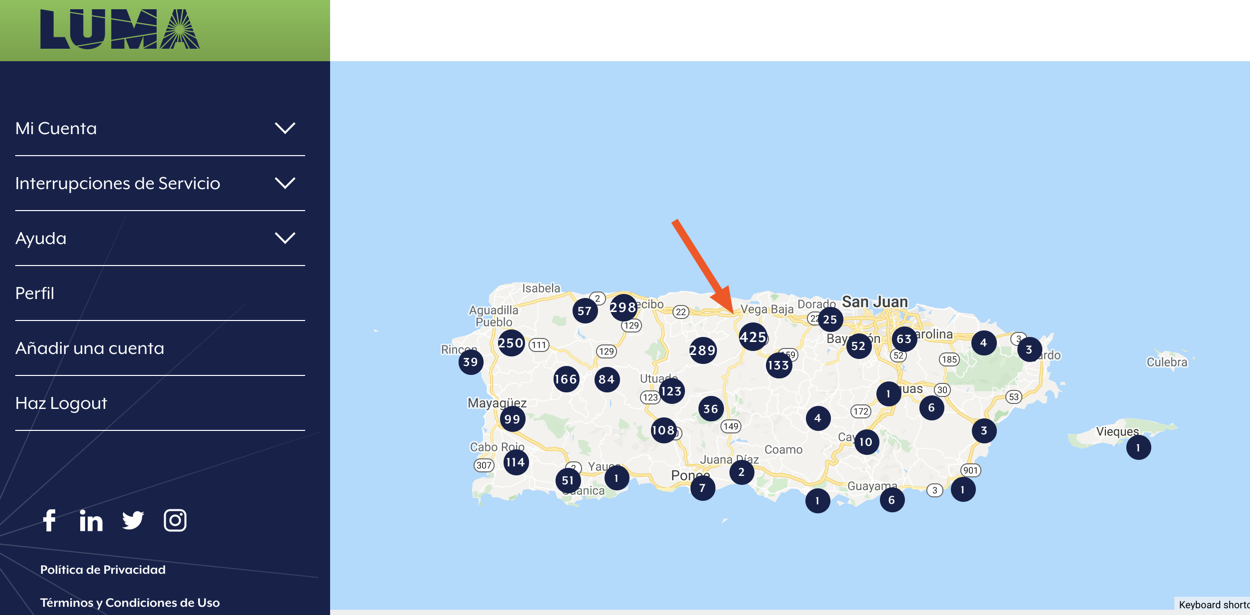
I’m fortunate enough that the power outages for me and my family are, at worst, a big inconvenience. But if someone relies on electrical medical equipment or refrigerating medicines, an outage can be life-threatening. There are also the cascading effects of a power outage, such as spoiled food, loss of internet access, and useless traffic lights. Just yesterday a power outage knocked out the water supply for part of the island when a water pumping station’s backup generator also failed.3
I’ve tried to generally strike a positive tone on this blog, but the power situation in Puerto Rico is dire.
Last week the Puerto Rican Power Authority declared a state of emergency for its own power grid to help speed up repairs needed to keep the overloaded, outdated system running. And it’s not like Puerto Ricans are using excessive energy. Even with all of the AC units, “energy use per capita is typically one-third as much in Puerto Rico as it is in the 50 U.S. states.”4
Furthermore, the energy here, already 2-3x more expensive than the mainland US, is getting more expensive. Fuel costs continue rising worldwide (crude oil, for example, is at its highest price since 2014) and companies like LUMA will pass those costs onto their customers. Add this to the fact that “households in Puerto Rico have a median annual income of $20,474, which is less than the median annual income of $65,712 across the entire United States.”5 It’s not good.
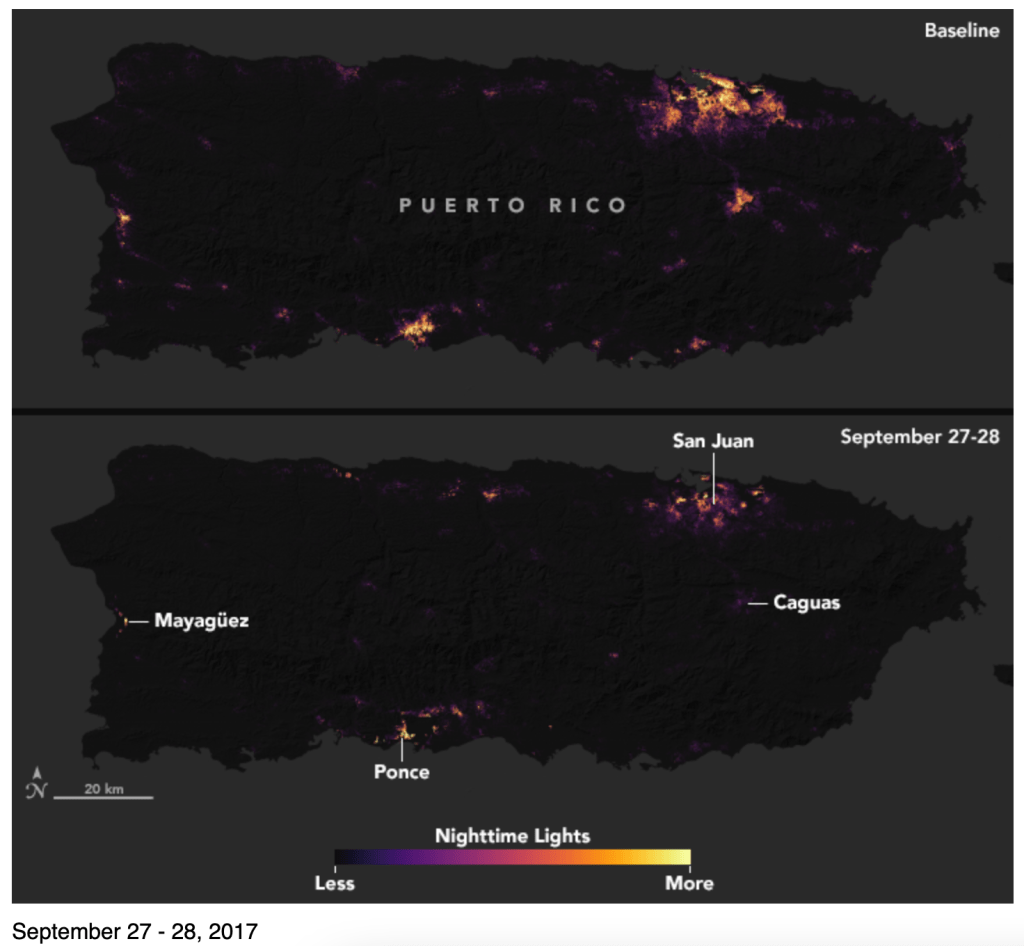
If the present situation is dire, the future of Puerto Rico’s energy crisis is grim and uncertain. Some 97% of the island’s energy still comes from imported fossil fuels powering a decayed system that cannot take another major storm. LUMA, the energy distributor, is becoming more and more unpopular. Just this week community members from Puerto Rico testified before a House committee in DC that LUMA has mismanaged the power grid and needs to be held accountable.
The good news is there is political will towards a more sustainable energy solution. A law signed in 2019 says that the Power Authority needs to:
- obtain 40% of its electricity from renewable resources by 2025
- obtain 60% of its electricity from renewable resources by 2040
- obtain 100% of its electricity from renewable resources by 2050
The other good news is the island gets a lot of sun, more than twice what Germany receives6 and Germany is the fourth biggest producer of solar energy in the world. The source of energy is already here.
The potentially good news is that $14 billion of FEMA relief money from Hurricane Maria has been earmarked for Puerto Rico’s power grid but is yet to be spent. I can’t see a better alternative for solving Puerto Rico’s energy crisis than investing this relief money into a robust, renewable energy power grid.
Footnotes:
- The power has gone out three times since I started writing this post yesterday.
- Sometimes this didn’t work as our professors lived in the same apartment complex as the students.
- A few months ago we purchased a portable backup generator for our house and it has been a blessing.
- Puerto Rico Territory Energy Profile, US Energy Information Administration. (Hawaii, the lowest energy using state per capita, is at 6,446 kWh per capita. Puerto Rico is around 6,099 kWh per capita.)
- https://datausa.io/profile/geo/puerto-rico/
- From pg 12 of the PDF from Queremos Sol. This is a group with a thorough solar proposal that I want to research more.


 Gringo Green
Leave a comment